Author: Nandini Gupta

  • Effective Web Leads Tracking for Inbound Sales Team to Optimize Sales Funnel

    Effective Web Leads Tracking for Inbound Sales Team to Optimize Sales Funnel

    Effective Web Leads Tracking for Inbound Sales Team to Optimize Sales Funnel

    Why is every company trying to optimize its Lead/ Sales Tracking?

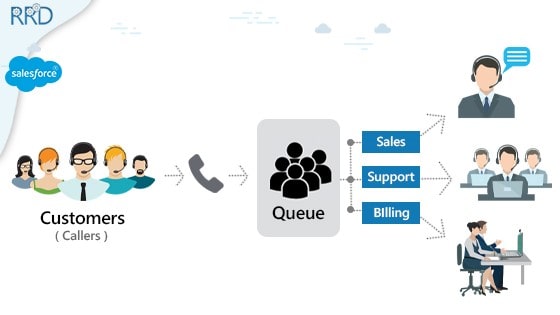
    Lead management is defined as a set of procedures/ methods of managing the incoming leads efficiently. It involves categorizing the lead from the moment it enters the system, to tracking the behavior and affirming by conversion of lead into an opportunity. It is crucial to the organizations as with the increasing amount of inbound data in CRMs, it becomes complicated to focus on each incoming lead which results in the need for a robust and open platform solution to drive the process effectively. The diagram below depicts steps in the lead management system

    buyers and increase both the quantity and quality of touches on those buyers.

    Every day your marketing campaigns might generate a lot of traffic via Email Campaigns, Webinars, Social Media Campaigns, Paid Advertisements, Demos, Organic Search, etc. But do you have an efficient way to store/ capture the leads into a box for your Sales Teams to work on?

    Usually, leads generated from multiple sources like lead generation forms (email alert), emails, referrals (emails), etc. are received in the form of a mail and hence there is a high probability of these mails getting lost in the clutter.

    And, did you know that 19% of buyers want to connect with a salesperson during the awareness stage of their buying process when they’re first learning about the product, 60% during the consideration stage, and 20% want to talk to them during decision stage?

    The right question at this stage should be whether we are ready to cater to these leads at different stages into a much efficient system?

    In this article, let us discuss Lead Generation and Lead Capturing to Lead Distribution from Website in more details and try to identify an effective way to store and accommodate their needs:

    Adding Lead Generation Forms to the page which generate the most traffic

    Let’s consider Salesforce as the CRM which the company is currently using and map out the steps in the process of Managing Leads through it.

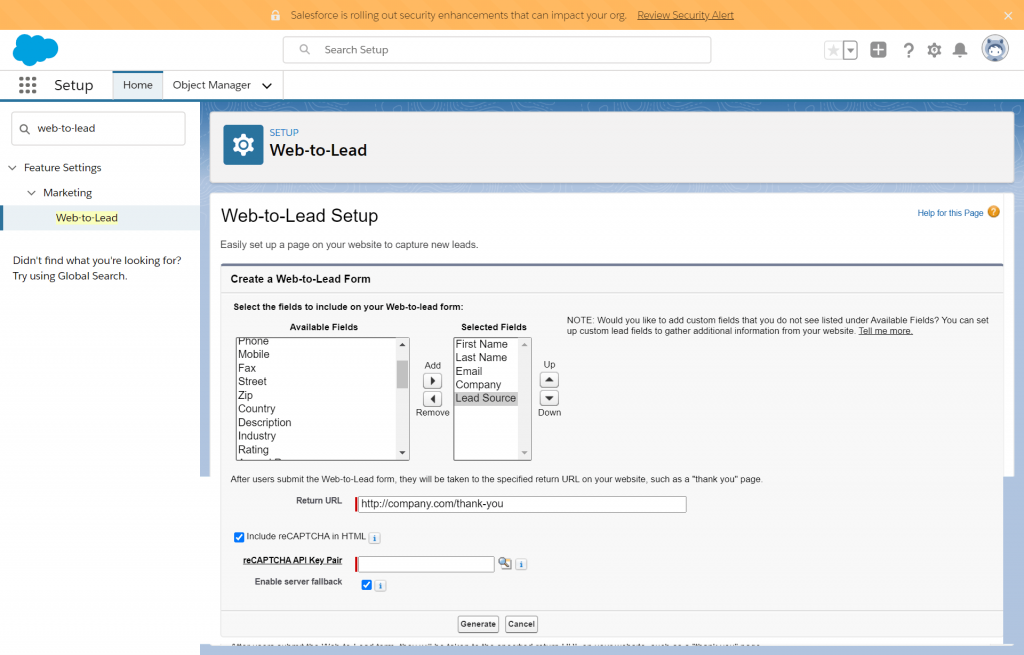
    Generate or create a web to lead form to embed in your website

    Based on the classification that the organization prefers, please add fields to your form. For instance, in this, I will classify my leads based on the lead source.
    Define Email Templates

    In Salesforce, Email Templates can be created in text only, HTML, Custom (without a letterhead), and VF format. Creating an email template ensures standardization by enabling consistent messaging and increases the productivity of the team responsible by saving them time in typing and sending the mailers. These are some quick steps by which you can easily set up the templates:

    1. Folder- Create a new Email Template Folder and assign its public access and permissions to the users accordingly. Permissions can also be defined separately for Public Groups and Roles. You have an option to add and modify out-of-the-box email templates to the folder.

    2. New Letterhead- To bring uniformity to the table, start with creating the letterhead, which takes care of color scheme, logo, header and footer settings, etc.

    3. New Template- Define the template name and encoding options (Informs Email Service of how to read the content in the email body). State the subject line you would want to use. Type your content in the message body and add merge fields to enhance the automation process

    Lead Tracking software

    Create Workflow Actions

    The workflow in Salesforce lets the user automate internal procedures to save time across other critical implementations and enrichment procedures. In other words, the workflow is a business logic engine that triggers when specific criteria are fulfilled. There can be two types of actions:

    1. Immediate Actions

    2. Time-dependent Actions

    Let’s start by creating Email Alerts, and define the object which is being targeted, here, Lead and set up the template created in the previous step and select the recipient type.

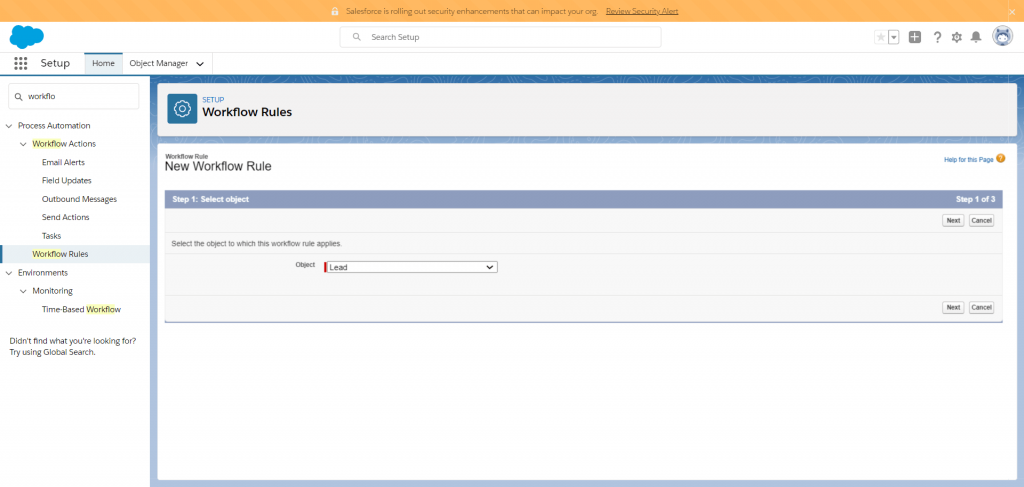
    Set-up Workflow Rules

    Since we are working on Lead Management, define the object as lead and proceed to the next step where rule, name, and criteria to trigger workflow action will be established.
    Lead Assignment Rule

    Following the above-listed steps, you would be able to see all the leads in your Sales

    Let’s jump on to Lead Distribution now and try to throw some light on “Why is Lead Distribution an important step?”

    Lead Distribution refers to allocating lead references to Sales Team based on various factors listed below:

    1. Geography: Address, Zip Code, City, State, Country, Continent, Longitude, Latitude, etc.
    2. Account Details: Company Name, No. of Employees, Hubspot Score, etc.
    3. Date/ Time: Lead Converted, Lead Load Time, Status Change, Last Viewed and Updated Date
    4. Contact Details: Full Name, Email ID, Phone, Fax, etc.
    5. Lead Associated Fields: Lead ID, Product Interest, Status
    6.  Sources: Phone, Web, Email, Reason, Subject Line, and Referrals.

    This process may seem to be cumbersome, tedious, and time-consuming. Managers spend a lot of their productive time in timely data distribution, managing lead turnaround time, administering teams’ time schedules, and eliminating issues of cherry-picking of leads.

    Round Robin Distributor (RRD), the native Salesforce Application helps you make such complex decisions in a snap of the fingers on a real-time basis. Lead Distribution and Assignment based on configurable business logic is all you need to make the best use of your productive time.

    Let’s take a quick ramble through Lead Distribution journey being made efficient through Round Robin Distributor:
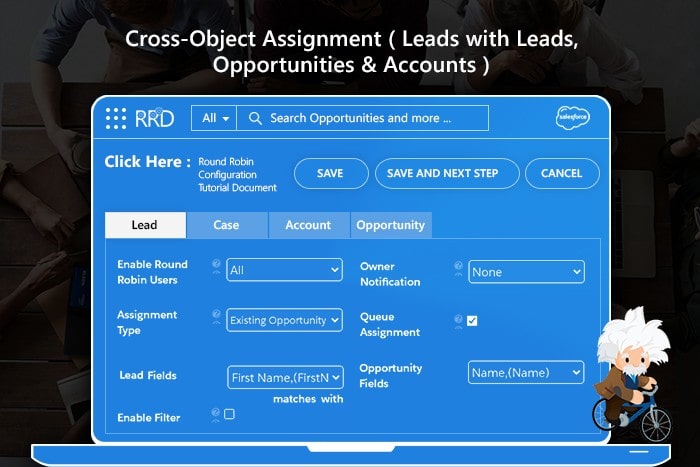
    Round Robin Distributor

    1. RRD helps you assign inbound records based on configurable lead assignment rules and logic.
    For instance, we want to assign ownership of lead records to a user/ team, which already has a business relationship with a company in the past.

    2. Round Robin Distribution method to distribute records to salesforce teams and users based on defined criteria.
    Take the reference of a Card Dealer (RRD) here. Suppose he/she is distributing cards (records) to 5 players (users/teams) in a game (team/system), then if 1st Card goes to Player 1, and 2nd Card goes to Player 2 and so on up to Player 5. Now for the 6th Card, the dealer would again distribute it to Player 1, 7th Card to Player 2, and so on.

    3. Ability to filter individual records from Relationship-based assignment and much more.

    Aren’t you excited already to give it a try? To simulate your use-case, try out Round Robin Distributor today for a month free.

    Hope this article provides you enough insights from shifting from traditional email-based receipts and move the lead management process to CRM constructively. Stay tuned to the page to receive more information regarding aligning all your processes to Salesforce.

    Maybe You Like

    Round Robin Distribution: Better alternative to Omni channel

    Round Robin Distribution: Better alternative to Omni channel

    Salesforce Round Robin Lead Assignment *Best Practice* with RRD

    Salesforce Round Robin Lead Assignment *Best Practice* with RRD

    Salesforce Lead Distribution – Efficient assignment through Round Robin Distributor

    Salesforce Lead Distribution – Efficient assignment through Round Robin Distributor

    Effective Web Leads Tracking for Inbound Sales Team to Optimize Sales Funnel

    Effective Web Leads Tracking for Inbound Sales Team to Optimize Sales Funnel

  • Managing High-Priority Support Tickets like an Ace in Salesforce

    Managing High-Priority Support Tickets like an Ace in Salesforce

    Managing High-Priority Support Tickets like an Ace in Salesforce

    That ticket requires immediate attention! If you are looking to optimize handling of urgent cases (tickets) using Salesforce as a helpdesk ticketing system, then you have landed at the perfect place.

    As your client base grows, you would require a customizable solution to the available functionalities that a platform can offer. With the growing awareness, many organizations have adopted or switched to using Salesforce as their Helpdesk solution. Salesforce Service Cloud streamlines the process of case (ticket) management as the agents get connected through cloud. With remote working teams, it becomes a relief with the ability to resolve customer request from just anywhere connecting to all the raised questions and activities.

    Round Robin Distributor (RRD) for Salesforce enhances you experience of optimizing your pipeline for a better customer service experience and enhanced retention levels.

    With RRD, the path to achieve the desired outcomes with customer success becomes efficient for the following features it has to offer:

    1. Manage Ticket Volume- With RRD tool, service teams can control the number of open tickets a person can handle in a specified period. Let’s consider an example of a Support Desk team which has 10 agents working simultaneously on the incoming tickets, then we can introduce capping on intervals for the open cases in order to control the uneven distribution and burnout caused due to indefinite handling of tickets in a shorter span. According to certain studies, this aids in resolving for the First Level Resolution Rate.

    2. Omni-Channel Support- Your customers can reach out for support from a wide variety of communication channels, specially during COVID times. The channels range from social media, website support forms, live chat on websites, emails and all the way to traditional phone support. Using Salesforce, the organization wants to track all these case sources on a real-time basis which can be automatically routed to the right agent based on the source and skills which could be configured in RRD without any technical knowledge.

    3. Priority-based routing- Ticket priority helps organizing the tickets based on the urgency given the customer’s needs and past client relationship with the organization. The tickets can be classified as low, medium, and high priority and could be routed to an agent (given the high priority for a service case) even if the user-level capping is full.

    4. Auto Re-assignment of tickets- For geographically dispersed and remote teams working in varied time shifts, the re-assignment of tickets can be triggered automatically as the shifts change so as to optimize the transfer process and optimize the turnaround time for SLAs. With RRD, the process to automate assignment can be automated for the business requirements based on the specific requirements put forward by the organization.

    5. Real-time Alerts- As soon as the agent is assigned a support ticket by automated routing, a task gets created and a notification alert is created for the user.

    6. Maintain default Queue- Increasing load of inbound data can lead to inefficient systems unable to hold more than a certain number of records at a time. Manager would have to eventually invest time to assign the records to the right team, but with the app, distribution works in real time with an option to run in batches from every 10 minutes to nightly from the queue to the best available agent

    7. Account-based ‘Relationship Assignment’- useful for cases as you want to assign them to the same person that is currently working with another case/lead from the same client/ company. This feature enables support agents to maintain business relation with the clients cases mapping based on territory, product or service types, skills, company information, etc. if the agent has been working on a similar record.

    If you want to know more and looking for a solution to fit your service team, fill the contact form or simply download a trial version of RRD for your Salesforce org and our account team will reach out to you for more assistance.


    Maybe You Like

    Round Robin Distribution: Better alternative to Omni channel

    Round Robin Distribution: Better alternative to Omni channel

    Salesforce Round Robin Lead Assignment *Best Practice* with RRD

    Salesforce Round Robin Lead Assignment *Best Practice* with RRD

    Salesforce Lead Distribution – Efficient assignment through Round Robin Distributor

    Salesforce Lead Distribution – Efficient assignment through Round Robin Distributor

    Effective Web Leads Tracking for Inbound Sales Team to Optimize Sales Funnel

    Effective Web Leads Tracking for Inbound Sales Team to Optimize Sales Funnel

  • Salesforce Lead and Case Assignment Rules Lightning

    Salesforce Lead and Case Assignment Rules Lightning

    Salesforce Lead Distribution – Efficient assignment through Round Robin Distributor

    Lead distribution – Lead distribution is a set of process through which all incoming leads are assigned to a skilled and qualified sales representative. The business requirement in doing so is to reach out to the prospects in limited time and putting their best representative to work.

    Based on a recent Harvard study, it has been found out that if you follow up with a lead within five minutes of its generation you are 9 times more likely to convert that lead. Businesses across various industries are recommended to streamline their lead response process which can bring a 10% increase in their overall revenue. Over the years, businesses have tried to achieve quicker response time and to get their lead distribution process streamlined through various systems and software

    There are multiple custom relationship management software out there that provide the functionality of lead distribution. But salesforce stands apart among them due to its flexibility and customization abilities. Salesforce not only helps the business by providing seamless integration with the current business system but also provides your business with intuitive and insight generating reporting capabilities.

    Now a business can have multiple sources through which leads can be generated. It can be through web, chat, emails, events, partner portals etc. Out of the box, Salesforce provides you the ability to build Lead assignment rules to assign leads to a small team. But as you scale, salesforce lead distribution based on schedule, geographies become complex and salesforce lead assignment rules wouldn’t be able to handle such complex logic. To provide businesses the ability to go one level deeper with their salesforce lead distribution logic, we have an automated intuitive tool such as Round Robin Distributor which you can easily download from Salesforce App exchange

    Why is it necessary to have a Salesforce lead distribution app for your Business?

    There are multiple business use cases that can’t be handled through lead assignment rules that salesforce provides out of the box. To cover those in detail, we have listed a set of functionalities round robin distributor provides below:

    1. Schedule based Distribution – It’s a prominent need for a business to assign leads to a representative when he/she is available so that there should be someone to quickly reach out to the prospect or else the lead would be idle for a longer period. With Round Robin distributor, you can assign leads to your sales representatives based on their specific schedule.
    In addition to schedule-based distribution RRD also provide an added functionality to assign leads to the users that are currently logged in the system. We refer them as online users – this functionality keeps a check so that the leads are assigned to only users that are currently available.

    2. Geography Based Distribution – From a business perspective, it is sometimes necessary for the business to assign leads to the representatives based on the region they belong to. This means there should be a way to provide segregation between leads that are assigned to your offshore team from the leads that are assigned to your onshore team. You can also go one level deeper and segregate teams within a country based on various zip codes.

    3. Skipping weekends – This is where the concept of Salesforce Queue pops. With Round robin distributors we provide you a functionality to accumulate your leads in a bucket/queue during weekends. Doing so once your team of representatives are back on Monday you can manually or through our scheduled automation can start assigning them leads in round robin fashion.
    This helps the business to segregate and plan for the leads that they receive at the start of the weekend and can work around the schedule that they need to set for their individual sales representative.

    4. Team criteria – To automate the business workflow, we have a concept of a team of individual sales representative. Teams provide you an opportunity to segregate your users in terms of their location, capabilities, schedule etc.

    5. Relationship based criteria – Based on our past business use cases, we have seen that the past relationships can be a major factor for a company in their lead assignment. For e.g. Leads from a certain company can be assigned to the same user, it was last assigned to.

    6. Open to customization – It is important for an app to be customizable based on client needs. Round robin distributor is currently constructed in such a way that any new business workflows can be accustomed. We understand that some businesses can request for a few changes in the app based on their business needs, which isn’t possible to cater to in other legacy systems, but round robin distributor takes care of such needs.

    7. Reporting – With round robin distributors, you will be able to see how many leads are assigned to the representative in the past day, week, or month. You will be able to see if the sales representative followed up on the lead and what was his response time.

    8. Notification to the user – It is important for your sales representative to know when a lead is assigned to him/her. Round robin distributor provides you the capability to notify your user either through a task which is created when a lead is assigned to them, or they can be notified through a mail.
    This will help the sales representative to be on track and do not miss any high priority leads.

    9. Reassignment of leads – Managers have the capacity to look for sales representatives that have been assigned a lead for longer duration and are still not working on that specific lead. In such cases, you can reassign the lead back to the queue so that it can again be redistributed through round robin logic.

    10. Prioritization of teams – If you have multiple teams that works on similar criteria such as geography you can segregate your teams based on priority. By doing so, one set of your users would have the ability to receive the high priority leads first and once this limit is exhausted, the next set of users that are lower in priority level start receiving the leads.

    11. Volume management – With round robin distributor, you can manage the volume of leads that should be assigned to your specific team in a day/week/ month. By doing this you can get a track of incoming work scheduled for your team.

    To conclude, round robin distributor is a one stop solution to cater to all your inbound distribution logic. It is a must have tool for all your salesforce lead distribution needs. We are proud to say that we at Mirketa have provided solution to clients across various industries such as healthcare, education, transportation, retail, IT services etc. through our round robin distributor app.

    Maybe You Like

    Round Robin Distribution: Better alternative to Omni channel

    Round Robin Distribution: Better alternative to Omni channel

    Hello world!

    Salesforce Lead Distribution – Efficient assignment through Round Robin Distributor

    Salesforce Lead Distribution – Efficient assignment through Round Robin Distributor

  • Solving Case Response Time Issues with SalesForce

    Solving Case Response Time Issues with SalesForce

    Solving Case Response Time Issues with SalesForce

    Covid-19 Pandemic has posed a significant challenge to Business Process Outsourcing Sector, and it’s now when companies realize how crucial Case Response Time can be. As the companies are down-sizing, the load of Inbound Data is increasing multifold, posing a challenge to the sector.

    But what is Case Response Time?

    Case Response Time or Service Response Time is the period between when a customer requests for service, inquires, registers a complaint, and when it is responded. It is a major contributor to a company’s potential to retain top and high priority customers.

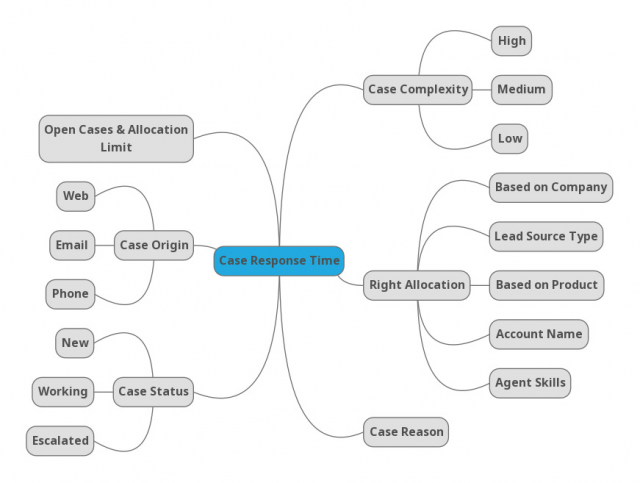
    Let us understand the factors that may impact case response time in your company

    1. Complexity of a Case: Usually, your L1 Support teams deal with problems that come under the purview and capacity of the customer to resolve by getting the minimum guidance, but, as the case complexity rises, these cases get assigned to L2 and L3 Support teams. As the complexity grows, the difficulty of an Admin/ Manager increases proportionally to assign these cases to the right people/ teams at the right time.

    2. Allocation to the Right Representative: Your Accounts and Clients want to talk to the same representative/ agent who knows their Case from the Initial Phase. Without this working relationship being successful, customers may feel like they are just a number.

    3. Reason for receiving a Case: Depending upon the product/ service, the case response time varies due to the reason for the inquiry and escalation required. The reasons could be Product Installation, Breakdown, Performance Related Issues, Breakdown, Complexity of the equipment, or the product.

    4. Status of the Case/ Enquiry: How quickly your support cases are addressed depends on the assigned severity. The distribution of a Case can also happen based on the time that went into its resolution. Managers also need to pay attention to the escalation process to surface critical issues and voice concerns if a support ticket isn’t being addressed appropriately.

    5. Case Origin: When it comes to answering complaints, the origin of the case, becomes an essential parameter for addressing the issue. Every Channel needs to have a standard response policy instead of abruptly jumping on questions and complaints.

    6. Open Cases allocated to Representative/ Service Team: To improve the efficiency and boost the productivity of the team and individual agents, it’s necessary to keep a track on the number of cases they have been allocated and the open cases in a particular period so focused case resolution could be promoted.

    salesforce case response time

    Why is Customer Response Time germane to our Service Teams?

    1. Customers do not wait for more than 6 hours for your response, according to Eptica.

    2. 90% of Americans use customer service as a factor in deciding whether or not to do business with a company, according to American Express.

    3. 54% of customers used email for customer service last year, making it the most used digital channel for customer service, according to a report by Forrester.

    4. Increasing customer retention rates by just 5% can increase profits by between 25% and 95%, according to Bain & Company.

    5. 35% of customers expect to be able to contact the same customer service agent through any communication channel, according to Zendesk.

    How can Automation overhaul your Business?

    Organizations with successful automation efforts are more likely than others to designate automation as a strategic priority, according to a 2018 McKinsey Report. Applicability of Automation across the Customer Experience category in Service and Support can form a crucial part of your organization’s Rule-based Automation. Round Robin Distributor (RRD), powered by Mirketa Inc., is one of the most powerful and intelligent Salesforce tools for your Inbound Service teams, which can help you solve your Customer Response Time-related issues and aid Management saves their working hours worrying about smart and equal ways for distribution of cases.

    How RRD solve these issues?

    1. Round-Robin based Distribution

    2. Load Balancing and Weighted Allocation

    3. Takes care of your Urgent Cases

    4. Re-assign cases to the Most-Suitable Representatives

    5. Bulk- Management of Service Teams

    6. Configurable Alerts and Smart Dashboards to track Cases and User Activities

    7. Relationship and Criteria Based Case Routing

    RRD makes it easier to assign case records in a couple of steps; Just configure the Case level Settings; Create criteria specific teams and add Users and you are good to start off 

    salesforce case response time

    It adjusts to suit your business requirements and can be customized as per your use case. Aren’t you excited already to give it a try? Just jump on to our Salesforce AppExchange page today to get a free trial!

    Maybe You Like

    Round Robin Distribution: Better alternative to Omni channel

    Round Robin Distribution: Better alternative to Omni channel

    Salesforce Round Robin Lead Assignment *Best Practice* with RRD

    Salesforce Round Robin Lead Assignment *Best Practice* with RRD

    Salesforce Lead Distribution – Efficient assignment through Round Robin Distributor

    Salesforce Lead Distribution – Efficient assignment through Round Robin Distributor

    Managing High-Priority Support Tickets like an Ace in Salesforce

    Managing High-Priority Support Tickets like an Ace in Salesforce