Category: Salesforce Round Robin

  • Round Robin Distribution: Better alternative to Omni channel

    Round Robin Distribution: Better alternative to Omni channel

    Round Robin Distribution: Better alternative to Omni channel

    Round Robin Distributor (RRD) app overcomes the limitations of Salesforce Omni-Channel and optimizes and simplifies complex routing logics for your Sales & Service Teams.

    RRD tool is a robust, highly customizable, and open-platform solution for your distribution automation solutions and integrates with your marketing and sales automation apps like Marketo, Hubspot, and even with existing Salesforce Lead Assignment rules and Salesforce Case Assignment rules.

    Round Robin Distributor addresses the following concerns for you:

    1. Role based Assignment- Assign lead to multiple people working at various positions automatically by defining rules for distribution. For Instance, in Education Industry, you might want to assign Program Managers, Financial Advisor, Academic Advisor along with a Case Owner/ Contact Owner on a student which can be round robin’ed with Round Robin Distributor by simply defining the criteria for allocation.

    2. Re-assign Cases to another Queue–  If everyone in the selected Queue has either declined the case, capacity is exhausted or unavailability of agents, then the cases are routed to the queue with the second highest priority matching the rules logic defined

    3. Priority based handling of users and queues – Through Round Robin Distributors, Administrators can define priority to case teams, users and even queues based on which the inbound record can be routed to the best available agent.

    4. Distribution of leads and cases to the queue–  Leads & Cases can be round robin’ed between multiple queues based on the defined attribute for the incoming leads and cases through any integration or manual upload of inbound data.

    5. Criteria based routing to queues – Complex AND & OR logic can be used between various attributes and corresponding values can be defined in RRD Teams for efficient allocation for organizations with complex team structures.

    6. Ability to handle High– priority cases even if the Capacity is exhausted – For organizations, customer experience is of high value and to cater to high value cases, the agents should be able to respond them on priority even if the limit has been exhausted.

    7. Round Robin routing- method which is different from the routing method used in omni channel.

    8. Eliminates- the issue with Triggers and Workflow rules not working on updating by Omni-Channel.

    9. Handling relationship-based assignments– Useful for routing leads and cases as you want to assign them to the same person working with another case/lead from the same client.

    When to not use Salesforce Omni-Channel?

    This salesforce out-of-the-box functionality does come up with some limitations which makes it complex to use with other integrations and organizations looking to use advanced routing solutions for their teams.

    1. In a help article by Salesforce, it is mentioned that when Omni-Channel agents are online and see an error “LIMIT_EXCEEDED, limit exceeded”, it is possible that the queue has hit the maximum limit of 200000 records. New work items will not be added to the queue or routed to agents, until the volume has lowered.

    2. According to this Salesforce Article, If a work item requires certain skills, but no agents have those skills, then the work item isn’t routed.

    3. Omni-Channel is not capable of assigning records to the specific agent or rep based on past relationships with the clients based on the attribute of Salesforce incoming leads, cases, accounts, opportunity and any custom SFDC object.

    4. A record cannot be re-assigned to another queue if the case has not been owned within the

    5. If the capacity of volume assigned to an agent is exhausted, high priority cases or hot leads couldn’t be assigned to the best available rep which impacts the business throughput

    Maybe You Like

    Round Robin Distribution: Better alternative to Omni channel

    Round Robin Distribution: Better alternative to Omni channel

    Salesforce Round Robin Lead Assignment *Best Practice* with RRD

    Salesforce Round Robin Lead Assignment *Best Practice* with RRD

    Salesforce Lead Distribution – Efficient assignment through Round Robin Distributor

    Salesforce Lead Distribution – Efficient assignment through Round Robin Distributor

    Effective Web Leads Tracking for Inbound Sales Team to Optimize Sales Funnel

    Effective Web Leads Tracking for Inbound Sales Team to Optimize Sales Funnel

    Managing High-Priority Support Tickets like an Ace in Salesforce

    Managing High-Priority Support Tickets like an Ace in Salesforce

    Salesforce Lead and Case Assignment Rules Lightning

    Salesforce Lead and Case Assignment Rules Lightning

    [my_sidebar]
  • Salesforce Round Robin Lead Assignment *Best Practice* with RRD

    Salesforce Round Robin Lead Assignment *Best Practice* with RRD

    Salesforce Round Robin Lead Assignment *Best Practice* with RRD

    Assuming you are a Salesforce Admin/ Sales Manager at your company, you want a solution to route the inbound leads to the right and the most suitable sales representatives. You are the one who has to decide who gets the next incoming lead, and hence, you need a full proof solution to your constant problem of automating the process intelligently.

    Out-of-the-box Salesforce does not provide the ability to automate this process through Round Robin Algorithm. A lot of businesses today are seeking flexibility to customize and control the process of round robin lead assignment for their Salesforce orgs. You are just one read away for automating Salesforce Lead Assignment for your business.


    Let us understand how Salesforce round robin lead assignment is configured and get started with automating your lead management in Salesforce

    1. Assignment Groups/ Lead teams: Lead Assignment groups are a set of users in Salesforce (Sales representatives) who are put together as a team due to certain characteristics and skills they possess for lead management and associated issue resolution. Assembling and arranging the sales rep in your organization can be done based on territory managed (zip code, state, city, country, etc.), spoken language, products being handled, level of experience, priority hot leads, and much more.
    Popularly used clustering approaches in other organizations leading to a path of enhanced customer service and probability of a higher conversion ratio:

    1. The assembly line approach (based on responsibility)
    2. Product based Pods
    3. Skills based clustering

    2. Reps’ Availability: Sales representatives availability can vary based on the work shifts. With COVID, the concept of remote teams and offshore teams has kicked in and Administrators need to control the assignment given the work schedule and day offs of a sales agent. Controlling this would boost the sales throughput and optimize the pipeline thereby reducing the conversion time.

    3. Load Balancing & Weighted Allocation: Workload based distribution of leads to individual reps helps control burnout and avoids leads getting stagnated into the company’s sales queue. To improve response time, the leads should be routed to the reps (without cherry-picking) in a round robin manner. With this assignment method, the capacity of workload with each rep must be handled.

    4. Custom Schedule to track Assignment: The assignment can be switched on and off automatically to manage assignments for the reps that are not available for a certain duration. The leads can’t be waiting for reps to log in. This would eventually reduce the burden of manual work for the sales team leads and they would have increased hours for focusing on the actual and crucial tasks at hand.

    5. Priority based Assignment: Based on the urgency of a lead to be handled and the most suitable team to process it, the priorities can help decide which team/ user/ queue should be routed the which lead. By taking this into consideration, productivity levels can be enhanced, team effectiveness and overall performance too can be boosted.

    The above may not be a definitive and restricted list to follow but is definitely a starting point for addressing Salesforce Lead Assignment issues. With our Enterprise based Round Robin Distributor, we believe that any solution specific to Salesforce lead assignment automation can be addressed hence optimizing your end to end lifecycle and lead management process!

    For more details on how

    Maybe You Like

    Round Robin Distribution: Better alternative to Omni channel

    Round Robin Distribution: Better alternative to Omni channel

    Salesforce Round Robin Lead Assignment *Best Practice* with RRD

    Salesforce Round Robin Lead Assignment *Best Practice* with RRD

    Salesforce Lead Distribution – Efficient assignment through Round Robin Distributor

    Salesforce Lead Distribution – Efficient assignment through Round Robin Distributor

    Managing High-Priority Support Tickets like an Ace in Salesforce

    Managing High-Priority Support Tickets like an Ace in Salesforce

  • Salesforce Lead Distribution – Efficient assignment through Round Robin Distributor

    Salesforce Lead Distribution – Efficient assignment through Round Robin Distributor

    Salesforce Lead and Case Assignment Rules Lightning

    What are assignment rules in Salesforce?

    Salesforce Lead Assignment Rules and Salesforce Case Assignment Rules are used to automate lead capture and service support processes by assigning incoming leads and cases to the right owner (User or Queues). Based on the defined formula condition and the criteria set the assignment is done to the users or entered into the queue.

    To quote an instance from the actual setup: For web-to-lead or for email-to-case, the lead or case can be assigned on the basis of email subject or lead source to the defined user such as a sales rep.


    Top 7 Use-Cases for Salesforce Case & Salesforce Lead Assignment Rules

    Assignment rules are popularly used in organizations with complex structures to automate and make the assignment process more efficient. Rule-based lead and case assignment enable managers to save time and focus on streamlining sales funnel and eventually the bottom line. Here are some handpicked examples of how salesforce assignment rules are being used around

    1. Round Robin lead and case assignment rules- Round Robin assignment for leads and cases can be simulated for your Salesforce org in simple steps by setting up a Round Robin ID (Formula type field on the Lead object) using the steps mentioned in this article for implementing Salesforce Round Robin. Round robin assignment ensures a fair distribution of leads and cases to your sales & service teams eliminating cherry-picking of records by certain reps especially if the team doesn’t have past performance data for reference.

    2. Assignment based on Lead Source- Sales teams can handle incoming lead distribution from various sources in a matter of seconds and sort order of assignment to manage multiple offshore and inshore teams with inbound sources like web, emails, phone, social media campaigns, google ad campaigns, and many more.

    It helps support teams and sales teams to segregate reps into groups to manage such a diverse range.


    3. User Status based assignment- For organizations operating internationally, this could be used to maintain business throughput amongst remote and geographically dispersed teams working in shifts. The leads and cases can be transferred across as the working shift ends to the team online which helps to close and convert tickets based on configurable assignment rules.

    4. Product Interest-based lead assignment- Helpdesks and support centers receive hundreds of calls on a daily basis and it gets hard to manage customer satisfaction as 70% of customers want to talk to the same agent on placing a call again. It’s essential to map agents to the customer based on the product inquiry, product feedback, installation, breakdown, equipment complexity, etc. and the product which the customer is using or is in process of purchasing.

    5. Skill, Location and Experience-based assignment- Rule-based assignments can be done based on the agent skills (spoken language, the domain of expertise, etc), on reps’ and customers’ locations (city, state, country, zip codes, postal code, time zones, reps territory). Assignments can also be based on the experience; more weight could be assigned given the capacity of managing clients and giving the rep more priority.

    6. Re-assignment of neglected leads & cases- As the load of inbound data increases, leads and cases add up to a bottleneck which develops very quickly. When inbound lead volume is on a rise, the leads add up to the queue and it’s essential to distribute it rapidly to the sales teams to minimize response time. Cases when an agent has exhausted the limit to hold tickets, they can be re-assigned to other members in the team to the next most qualified agent. It helps salesforce admins to maximize the overall performance of sales teams.

    7. Load balancing & Capping- Volume management is a key part of sales management and it improves teams’ productivity by allocating a certain number of cases and leads to the reps. It could form big trouble when ignored and hence, with the growing awareness, system administrators are looking to find solutions that could cater to this need.

    How Round Robin Distributor app can help with implementing these use cases in Salesforce?

    1. RRD has configurations defined and customized to handle all possible case and lead sources, let’s say web-generated leads can be assigned to case teams and case queues with criteria having ‘source equals web’ for effective salesforce case distribution amongst agents.

    2. Custom round-robin schedules and calendars are used by Round Robin Distributor for salesforce lead distribution and case routing based on the availability at the time distribution are scheduled or on a real-time basis. Monitoring reps schedule and activity is also possible with user status reports and helps Admins in auditing the assignments done in a certain interval.

    3. Round Robin Distributor’s case assignment rules in salesforce are defined to handle scenarios (product based lead and case routing in salesforce) efficiently fulfilling the main goal of effective automation of your lead and case routing to the best available rep in the suitable teams.

    4. Round Robin Distributor helps managers to assign capping on a team and user level.

    As you can analyze from the above tips and methods, that Round Robin Distributor could prove to be the most powerful tool for your sales and service teams in saving the day. RRD is available for download on AppExchange and the team is available 24 X 7 to solve any use case and simulate the same for your business requirements on the go.

    Maybe You Like

    Round Robin Distribution: Better alternative to Omni channel

    Round Robin Distribution: Better alternative to Omni channel

    Salesforce Round Robin Lead Assignment *Best Practice* with RRD

    Salesforce Round Robin Lead Assignment *Best Practice* with RRD

    Salesforce Lead Distribution – Efficient assignment through Round Robin Distributor

    Salesforce Lead Distribution – Efficient assignment through Round Robin Distributor

    Effective Web Leads Tracking for Inbound Sales Team to Optimize Sales Funnel

    Effective Web Leads Tracking for Inbound Sales Team to Optimize Sales Funnel

  • Managing High-Priority Support Tickets like an Ace in Salesforce

    Managing High-Priority Support Tickets like an Ace in Salesforce

    Managing High-Priority Support Tickets like an Ace in Salesforce
    That ticket requires immediate attention! If you are looking to optimize handling of urgent cases (tickets) using Salesforce as a helpdesk ticketing system, then you have landed at the perfect place.

    As your client base grows, you would require a customizable solution to the available functionalities that a platform can offer. With the growing awareness, many organizations have adopted or switched to using Salesforce as their Helpdesk solution. Salesforce Service Cloud streamlines the process of case (ticket) management as the agents get connected through cloud. With remote working teams, it becomes a relief with the ability to resolve customer request from just anywhere connecting to all the raised questions and activities.

    Round Robin Distributor (RRD) for Salesforce enhances you experience of optimizing your pipeline for a better customer service experience and enhanced retention levels.

    With RRD, the path to achieve the desired outcomes with customer success becomes efficient for the following features it has to offer:

    1. Manage Ticket Volume- With RRD tool, service teams can control the number of open tickets a person can handle in a specified period. Let’s consider an example of a Support Desk team which has 10 agents working simultaneously on the incoming tickets, then we can introduce capping on intervals for the open cases in order to control the uneven distribution and burnout caused due to indefinite handling of tickets in a shorter span. According to certain studies, this aids in resolving for the First Level Resolution Rate.

    2. Omni-Channel Support- Your customers can reach out for support from a wide variety of communication channels, specially during COVID times. The channels range from social media, website support forms, live chat on websites, emails and all the way to traditional phone support. Using Salesforce, the organization wants to track all these case sources on a real-time basis which can be automatically routed to the right agent based on the source and skills which could be configured in RRD without any technical knowledge.

    3. Priority-based routing- Ticket priority helps organizing the tickets based on the urgency given the customer’s needs and past client relationship with the organization. The tickets can be classified as low, medium, and high priority and could be routed to an agent (given the high priority for a service case) even if the user-level capping is full.

    4. Auto Re-assignment of tickets- For geographically dispersed and remote teams working in varied time shifts, the re-assignment of tickets can be triggered automatically as the shifts change so as to optimize the transfer process and optimize the turnaround time for SLAs. With RRD, the process to automate assignment can be automated for the business requirements based on the specific requirements put forward by the organization.

    5. Real-time Alerts- As soon as the agent is assigned a support ticket by automated routing, a task gets created and a notification alert is created for the user.

    6. Maintain default Queue- Increasing load of inbound data can lead to inefficient systems unable to hold more than a certain number of records at a time. Manager would have to eventually invest time to assign the records to the right team, but with the app, distribution works in real time with an option to run in batches from every 10 minutes to nightly from the queue to the best available agent

    7. Account-based ‘Relationship Assignment’- useful for cases as you want to assign them to the same person that is currently working with another case/lead from the same client/ company. This feature enables support agents to maintain business relation with the clients cases mapping based on territory, product or service types, skills, company information, etc. if the agent has been working on a similar record.

    If you want to know more and looking for a solution to fit your service team, fill the contact form or simply download a trial version of RRD for your Salesforce org and our account team will reach out to you for more assistance.


    Maybe You Like

    Round Robin Distribution: Better alternative to Omni channel

    Round Robin Distribution: Better alternative to Omni channel

    Salesforce Round Robin Lead Assignment *Best Practice* with RRD

    Salesforce Round Robin Lead Assignment *Best Practice* with RRD

    Salesforce Lead Distribution – Efficient assignment through Round Robin Distributor

    Salesforce Lead Distribution – Efficient assignment through Round Robin Distributor

    Effective Web Leads Tracking for Inbound Sales Team to Optimize Sales Funnel

    Effective Web Leads Tracking for Inbound Sales Team to Optimize Sales Funnel

  • What is Round Robin?

    What is Round Robin?

    What is Round Robin?

    Round Robin Algorithm

    le caboodle about it.

    In general terms, Round Robin refers to ‘a series or a sequence’. Consider the example of a card dealer here and assume that there are 4 people sitting around a circular table including that card dealer, Andrew. Let us say Andrew distributes the card to Player 1, then second card to Player 2, third card to Player 3, and then fourth card to Player 4. Now while distributing fifth card, he will again start dealing it to Player 1, sixth card to Player 2, and so on.


    Round Robin Scheduling

    For all you IT enthusiasts out there, Round Robin is an algorithm designed to fulfill the agenda of virtual load balancing in operating systems, and network communications by distributing elements to the respective groups in a circular manner to control network traffic . For instance, a round-robin load balancer distributes traffic (client requests) across a pack of servers in a loop. There are variants of the traditional round robin algorithm that handle load, storage and even computing capacities namely weighted and dynamic round-robin.

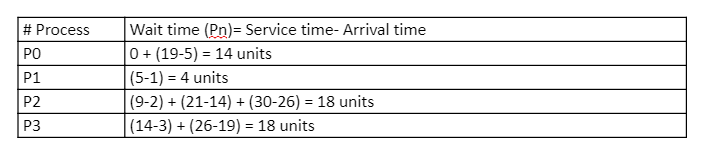
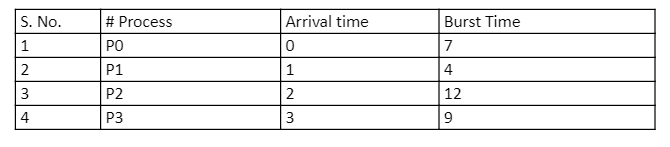
    Being preemptive, the round robin scheduler would push the processes out of the CPU after a certain time quantum (fixed time allocated to each process) defined. Context switching comes into play to save the preempted processes state. For example,

    salesforce load balancing

    Quantum: 5 

    salesforce round robin

    salesforce round robin

    Average waiting time= Avg (14, 4, 18, 18) = 13.5 units 

    Salesforce Round Robin distribution and assignment of leads/ cases

    In Salesforce, Round Robin logic implies in assigning and distributing inbound records (leads, cases, accounts, and opportunities) to teams, users, and queues in a circular and logical manner. Similar to the example stated above, assume a team of 5 Sales reps. 1st lead gets assigned to Agent 1, 2nd to Agent 2, and then after the turn gets completed, 6th lead is assigned back to Agent 1. Using Salesforce, you could create a field (formula type) on Leadsà Mod(Value({!Lead_Number__c}), #reps)+1

    Though there are limitations to implementing Round Robin Logic using Salesforce out of the box functionalities:

    1. Load balancing is a challenge as the Admins cannot define the load that can be managed by an agent and the records it can handle for a specified duration. E.g. unit capacity and percentage capacity cannot be allocated to a certain sales rep like 4 (40%) records to be assigned to Sales Rep A and 6 (60%) records to be assigned to Sales rep B.
    2. Knowledge of process builder, invokable actions, custom objects and fields, assignment rules and queue creation are required to fulfil the agenda.
    3. Doesn’t take into account the absence of an agent from the list.
    4. Can’t be replicated for various record types like cases, accounts and opportunities.
    5. Team assignment could be a challenge.
    6. Multiple Criteria cannot be deployed at a time as only one lead validation rule can be activated in a single go.

    Recommended application from Salesforce AppExchange to fulfil your specific use-case:

    Round Robin Distributor (RRD): Round Robin Distributor is a completely native Salesforce application that enables Salesforce Admins to easily configure without much technical knowledge and integrates well with the existing case and lead assignment rules in your salesforce org. RRD makes the lead and case assignment and distribution process quick for the Sales and Service teams across the industry.

    Some applaudable features that RRD offers:

    1. Round Robin Logic: RRD uses round robin salesforce logic to assign records as they are created and loaded into your salesforce org (via API/ data import) using criteria defined for multiple Sales and Service teams in your organizations. Distributes inbound records from the queues (integrates with Omni-Channel setup) to the right Sales rep in the right team as per the load and criteria.

    2. Capacity Management: Users can define the ‘to be assigned number of records’ (volume of records and open items) which a sales rep can handle in a defined duration. This helps in salesforce load balancing and the same can also be replicated for teams and queues.

    3. Real-time distribution: The inbound records are immediately assigned to the right reps in blink of an eye. If certain records need to be assigned after enrichment and update, then the distribution run in batches ranging from a few minutes to a day.

    4. Relationship based Assignment: Assigns the records to the agent working on another/ similar case for the same client or in same geography and much more.

    5. Customizable Schedules & Calendars: The assignment to a rep can be controlled with RRD user schedules. Helpful with teams working in different time zones, when some reps are on leaves, holidays and during short day breaks.

    6. Auditing: Salesforce admins can verify every task and action from RRD Activity Log which updates the user on real-time basis on the actions performed in the application.

    Round Robin Distributor is available to download from Salesforce AppExchange, on a month’s free trial. The team remains all geared up to help setup and configure your specific use case for your Salesforce environment. Get started with Round Robin Distributor today and fast pace your complex round robin assignments!

    Maybe You Like

    Round Robin Distribution: Better alternative to Omni channel

    Round Robin Distribution: Better alternative to Omni channel

    Salesforce Round Robin Lead Assignment *Best Practice* with RRD

    Salesforce Round Robin Lead Assignment *Best Practice* with RRD

    Salesforce Lead Distribution – Efficient assignment through Round Robin Distributor

    Salesforce Lead Distribution – Efficient assignment through Round Robin Distributor

    Managing High-Priority Support Tickets like an Ace in Salesforce

    Managing High-Priority Support Tickets like an Ace in Salesforce